

Extended Depth of Focus (EDOF) Lens
One focal point stretched into a range — so distance and arm’s length are usually covered by the same lens.
- A range, not several separate focal points
- Small print generally still needs glasses
- Recommended after your eyes are measured
Camden (Orchard)Joo ChiatClementiBedokToa PayohJurong
Found this helpful?

What an extended depth of focus lens is
An extended depth of focus lens — an EDOF lens — stretches one focal point into a continuous range instead of bringing a single distance to a sharp point.
A monofocal lens focuses at one distance. A multifocal lens creates two or three separate focal points. An EDOF lens does neither: it keeps one focus and extends it, so vision stays usable across a stretch rather than peaking and falling away.
-
A monofocal lens: one distance brought to a point
-
An EDOF lens: the point stretched into a range
It is built to do a different job, not to be a compromise between the other two, and the operation to put it in is the same whichever lens you choose. See all the lens options
What it brings into focus
The stretch runs from distance through the middle range. Where it ends is the part worth being clear about before you choose.
- Distance
- Driving, television, faces across a room. Usually clear, and this is the end of the range the lens is anchored at.
- Arm’s length
- A dashboard, a computer, a price label. This is the stretch the design is for, and it is what a monofocal lens set for distance gives up.
- Near
- A book, a phone, fine print. Generally still needs glasses, and prolonged reading usually does.
No lens is guaranteed to remove the need for glasses, and none should be chosen on that basis. The new prescription is not measured until the eye has settled, usually by the end of the first six weeks. See how recovery works


Not sure how much middle distance you use? Talk to our friendly staff and we will arrange an examination — the lens is recommended once your eyes are measured.
How it compares with the other two
Two trades, not a ranking. Each gains something and gives something up.
- Against a monofocal lens
- More of the middle distance in focus without glasses. In exchange, contrast is slightly lower, and night-time rings and glare are reported more often than with a monofocal lens.
- Against a multifocal lens
- Fewer night-time rings and glare, because the light is stretched over a range rather than divided between separate focal points. In exchange, near vision is weaker and reading glasses are the usual expectation.
Which one suits you comes down to what you would most like to do without glasses, and that is decided once your eyes have been measured. Monofocal and multifocal lenses have pages of their own.
At night
Stretching the focus is not free. Some light ends up outside the sharpest part of the range, and at night that shows as rings or streaks around headlights and street lamps.
They are reported more often than with a monofocal lens and less often than with a multifocal one. They are usually at their most noticeable in the first weeks and commonly settle as the brain adapts — though they do not settle for everyone.
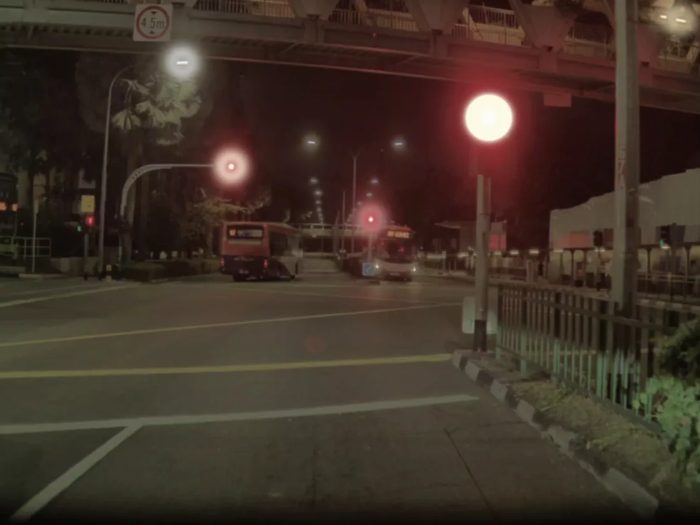
Talk to our doctor about your lifestyle before you choose, including how much you drive at night. The lens is implanted for life, so it is worth doing first.
Who it suits, and when it is not offered
It suits you if most of your day is spent looking into the distance and at arm’s length: driving, a screen, getting about. You may need a pair of reading glasses for small print.
When it may not be suitable
These are things your eye examination shows. Any one of them can make this lens unsuitable for you:
- Disease of the retina or optic nerve
- Stretching the focus lowers contrast slightly. Where the retina or optic nerve is already limiting vision, that reduction is harder to tolerate, so the type is generally not offered.
- Previous laser vision correction
- A reshaped cornea makes the lens power harder to calculate, and a stretched focus is less forgiving of a result that lands off target.
- A marked irregularity of the cornea
- It scatters light before the lens receives it, which a design already spreading light across a range has less margin for.
- Significant dry eye
- An unstable tear film scatters light at the front of the eye, and that tells most where contrast is already slightly reduced.
Astigmatism is a separate question, answered from the same measurements: a toric version has the correction built in. How a toric lens works
Where it sits in the cost of surgery
It costs more than a monofocal lens, and a toric version costs more again. The operation and the visit are the same; the difference is the lens.
| Service | Price |
|---|---|
| Cataract surgery · per eye | |
| Cataract surgery by senior eye surgeons | $5,200–12,000 |
| MediSave withdrawal limit | up to $3,280 |
| With a Senior Eye Specialist · Camden (Orchard) and Parkway East (Joo Chiat) | |
| First consultation | $174.40 |
| Follow-up consultation | $119.90 |
| With a Senior Eye Specialist · Bedok, Clementi, Toa Payoh and Jurong | |
| First consultation | $130.80 |
| Follow-up consultation | $98.10 |
| With a Primary Eye Care Doctor · Bedok, Clementi, Toa Payoh and Jurong | |
| First consultation | $76.30 |
| Follow-up consultation | $54.50 |
Surgery figures are per eye at The Straits Eye Centre, before MediSave. Withdrawal limit subject to approval by the CPF Board. All fees shown are nett.
The lens is the largest single thing that moves the surgery figure. Laser assistance and your insurance status move it as well. All surgeries are done by senior surgeons regardless.
There is a fuller breakdown of what you pay for cataract surgery.
Who performs it
All our senior consultant eye surgeons have more than 60 years of experience in ophthalmology between them. Talk to us for a quick appointment.
10,000+
cataract operations, between our senior consultant eye surgeons.
99%+
cataract surgery success rate at The Straits Eye Centre.
-
Dr Jayant V Iyer
Senior Consultant & Medical Director
The Straits Eye CentreMBBS · GDFM · MMed (Ophth) · FRCOphth · FAMS
-

Dr Jason Lee
Senior Consultant & Medical Director
The Straits Eye CentreMBBS · BMedSc · MMed (Ophth) · FRCOphth · FAMS
-

Dr Audrey Pang
Senior Consultant Eye Surgeon
The Straits Eye CentreMBBChir (Cambridge) · MMed (Singapore) · FRCOphth (London) · FAMS
-

Dr Laurence Lim
Senior Consultant Eye Specialist and Vitreo-Retinal Surgeon
The Straits Eye CentreMBBS (S’pore) · MRCS (Edin) · FRCS (Edin) · FAMS
Talk through the lens options
Send us a message with how you use your eyes day to day, and we will arrange an examination. The lens is recommended once your eyes have been measured.

Common questions
What is an EDOF lens?
An extended depth of focus lens, used in cataract surgery. Rather than bringing one distance to a sharp point, it stretches the point into a range, so distance and arm’s-length work are usually covered by the same lens. Small print generally still needs glasses.
What is the difference between an EDOF and a monofocal lens?
A monofocal lens is sharp at one distance and soft at the others. An EDOF lens trades a little of that sharpness for a continuous range, so the arm’s-length distance a monofocal lens set for far gives up is usually usable. Contrast is slightly lower and haloes are reported a little more often.
Is an EDOF lens the same as a multifocal lens?
No, and the designs work differently. A multifocal lens divides light between two or three separate focal points. An EDOF lens stretches one focal point into a range instead. In practice that usually means fewer night-time rings than a multifocal lens and weaker near vision.
Will I still need reading glasses with an EDOF lens?
Usually, for small print and for prolonged reading. The design is aimed at distance and the middle range rather than at close work, and no lens is guaranteed to remove the need for glasses.
Do EDOF lenses cause haloes at night?
Rings and glare around lights are reported more often than with a monofocal lens and less often than with a multifocal one. They are usually most noticeable in the first weeks and commonly settle as the brain adapts, though not for everyone. If you drive at night for a living, say so before you choose.
Can an EDOF lens correct astigmatism?
A toric version does. The astigmatism correction is built into the lens along one direction, so it has to sit at an angle measured before surgery. Whether you need one is measured rather than chosen.
Does an EDOF lens change the cost of surgery?
It costs more than a monofocal lens, and a toric version costs more again. The lens is the largest single thing that moves the figure for cataract surgery at The Straits Eye Centre; whether laser assistance is used and your insurance status move it as well.