The Straits Eye Centre @ Camden
Camden Medical Centre
1 Orchard Boulevard, #06-07/08 & #12-04
Singapore 248649
- Nearest MRT
- Orchard Boulevard (TE13)
- Directions
- Open in Maps

A cataract is a clouding of the eye’s own lens — part of how the eye ages rather than something you catch. It is found on an eye examination, and surgery is what clears it.
Camden (Orchard)Joo ChiatClementiBedokToa PayohJurong
Cataract surgery by senior consultant eye surgeons
Lens options and fees are discussed at your consultation.
MediSave & insurance claimable
MediSave, Corporate and Personal Insurance can be used towards eligible surgery.
Minimal waiting time for treatment or surgery
Vision loss can worsen with delay and may be irreversible. Poor vision also raises the risk of falls and fractures.
Found this helpful?

A cataract is a clouding of the lens inside the eye — the clear part behind the pupil that brings things into focus. It usually comes on slowly with age and makes vision hazy.
It is not a growth or a film over the eye, and does not spread from one eye to the other. Both eyes are usually affected in time, but rarely at the same pace, so the better eye can hide the change for a while.
There are three main types, named for where in the lens the clouding starts. Each affects vision differently, and many eyes have more than one.
Nuclear — clouding in the centre
Cortical — clouding from the edge inwards
Posterior subcapsular — clouding at the back
Worldwide, 17.2% of all adults have a cataract, and by old age almost everyone does.


Concerned about cataracts or vision loss? Talk to our friendly staff for a same-day appointment (subject to availability).
A clouded lens scatters light, so the change is rarely a simple blur.
Which of these comes first depends on where the clouding sits, not how far it has gone. Eyesight can still test well on a chart while night driving has become hard.
A cataract almost always changes slowly. Sudden changes in sight, eye pain, or a shower of new floaters or flashes are not typical of a cataract and should be checked promptly.
Named for where in the lens the clouding starts.
Ageing causes most cataracts. The lens adds new layers all through life and never sheds the old ones, so over decades it thickens and clouds — in every eye, at its own pace.
These are linked to getting a cataract earlier or worse:
Some can be changed and some cannot. Changing one does not clear a cataract that is already there.
By examination. There is no home test that settles it.
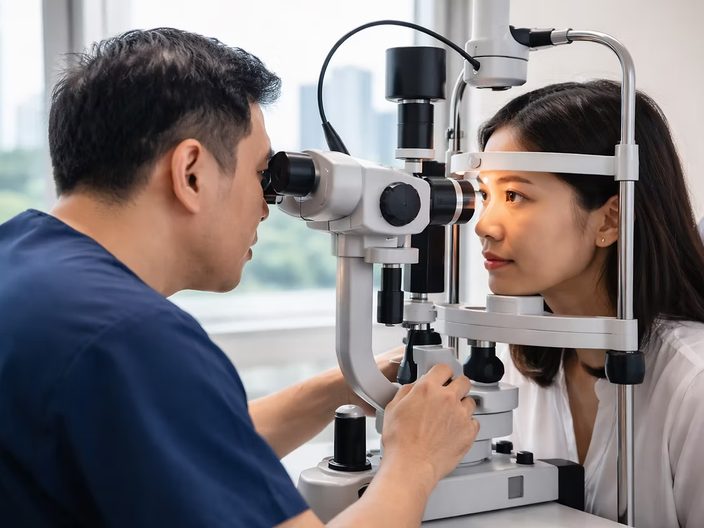
A cataract is confirmed by looking at the lens through a slit lamp, usually after drops to widen the pupil. What a slit lamp examination involves is set out with the rest of the eye tests.
Blurring, glare and dull colours can also come from dry eye, changes at the macula, diabetic eye disease or an out-of-date prescription, and more than one can be present at once. Only an examination can tell them apart.
At our Clementi, Bedok, Toa Payoh and Jurong clinics, a cataract screening looks at the lens and a general eye check-up covers the eye more broadly. Both are senior optometrist-led, and the report is reviewed by an ophthalmologist.
No drop, tablet, supplement or eye exercise clears a cataract. The only treatment is surgery to remove the cataract. Offered eye drops? Read what the research found.
Not every cataract needs surgery straight away. An early one can often be managed with new glasses and brighter lighting, sometimes for years. When to have surgery depends on how much the cataract gets in the way of everyday things, such as driving at night or reading — not on how cloudy the lens looks.
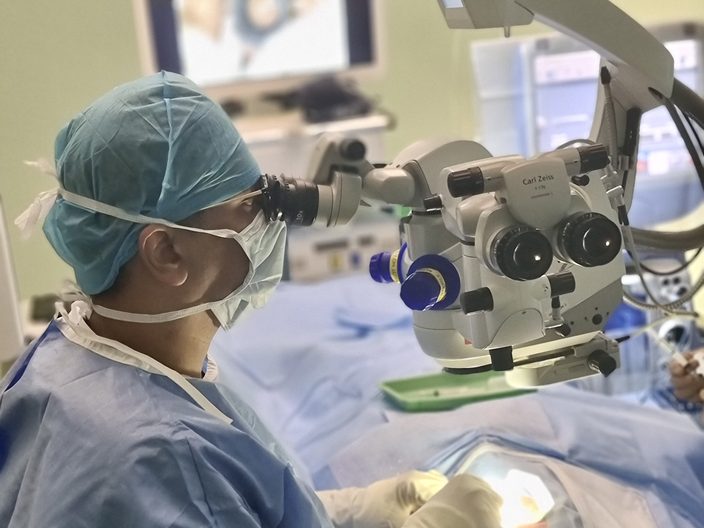
The clouded lens is removed through a small opening and replaced with an artificial one, as day surgery under local anaesthesia, one eye at a time. The two main questions are which lens goes in and what it costs, MediSave included. Recovery takes weeks, not months, for most people.
Cataract surgery treats the lens only. It will not undo damage from glaucoma, macular degeneration, diabetic eye disease or an optic nerve problem, though a clear lens often makes these easier to monitor.
Cataract surgery at The Straits Eye Centre is between $5,200 and $12,000 per eye, before MediSave. The Straits Eye Centre is a MediSave-approved clinic.
| Service | Per eye |
|---|---|
| Cataract surgery by senior eye surgeons | $5,200–12,000 |
| MediSave withdrawal limit | up to $3,280 |
Figures are per eye at The Straits Eye Centre, before MediSave. Withdrawal limit subject to approval by the CPF Board.
The final range depends on the lens, whether laser assistance is used, and your insurance status. Every operation is performed by one of our senior consultant eye surgeons. See the full cost breakdown
Cataract surgery at The Straits Eye Centre is performed by our senior consultant eye surgeons, with more than 60 years in ophthalmology between them. Talk to us for a quick appointment.
99%+
cataract surgery success rate at The Straits Eye Centre.
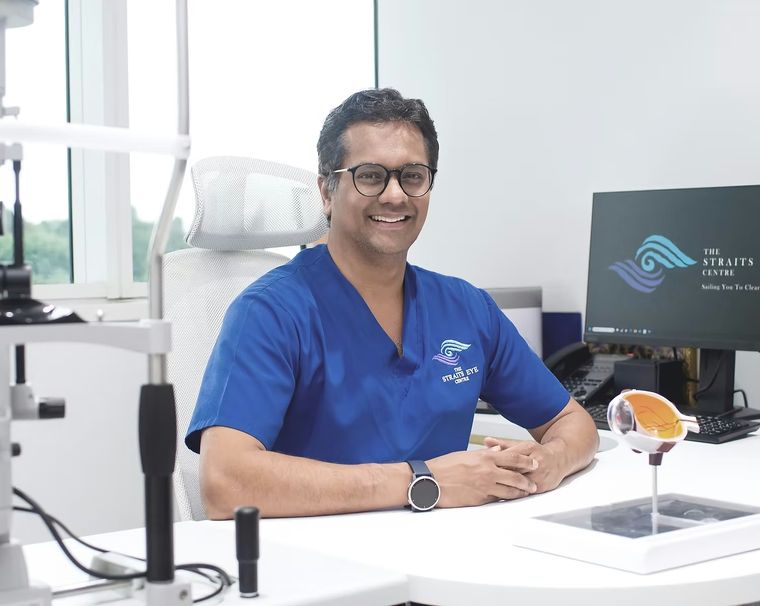
Senior Consultant & Medical Director
The Straits Eye Centre
MBBS · GDFM · MMed (Ophth) · FRCOphth · FAMS
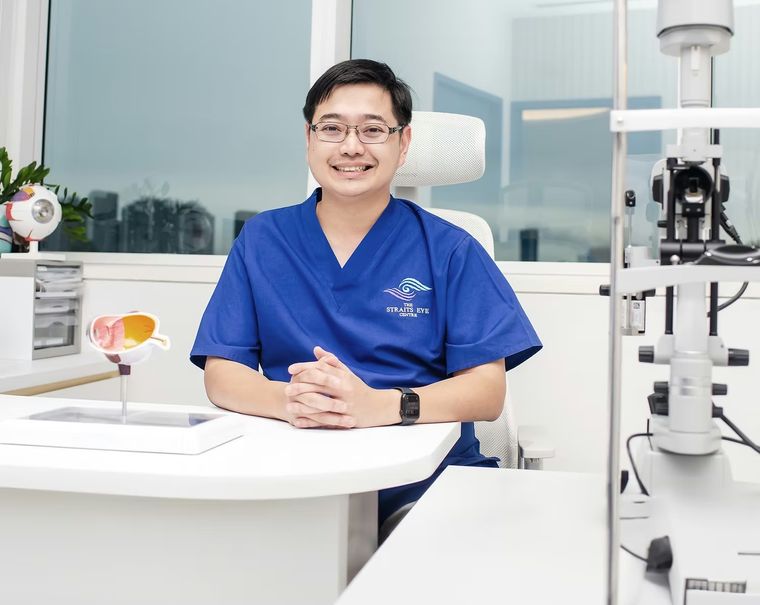
Senior Consultant & Medical Director
The Straits Eye Centre
MBBS · BMedSc · MMed (Ophth) · FRCOphth · FAMS
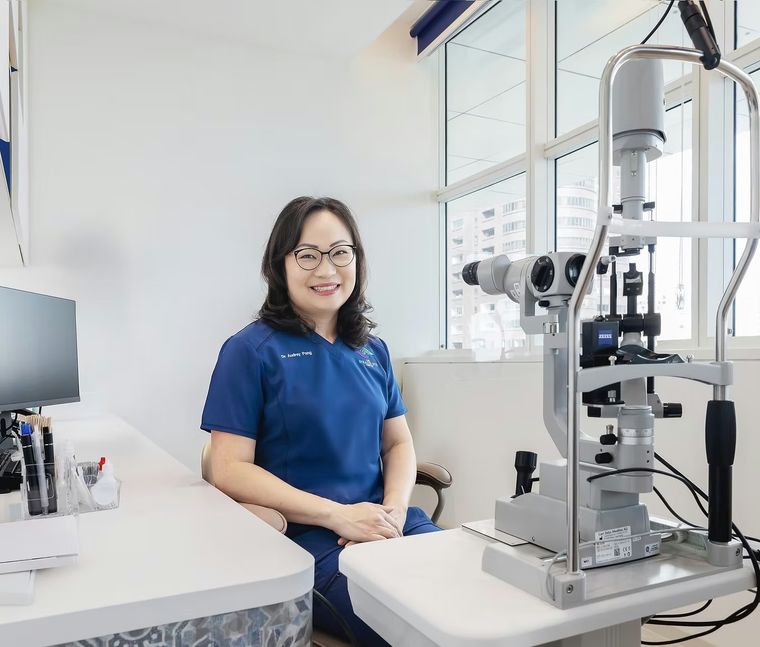
Senior Consultant Eye Surgeon
The Straits Eye Centre
MBBChir (Cambridge) · MMed (Singapore) · FRCOphth (London) · FAMS
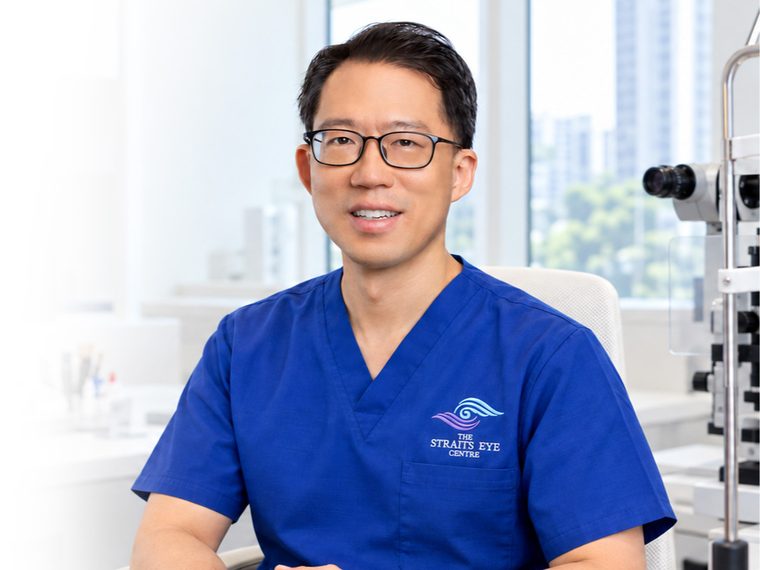
Senior Consultant Eye Specialist and Vitreo-Retinal Surgeon
The Straits Eye Centre
MBBS (S’pore) · MRCS (Edin) · FRCS (Edin) · FAMS
A cataract is a clouding of the lens inside the eye — the clear disc behind the pupil that focuses light onto the retina. As its proteins change with age the lens scatters light instead of passing it cleanly, so vision dulls, glare increases and colours wash out.
No. Nothing clears a lens that has already clouded — not drops, tablets, supplements, eye exercises or a change of diet. Stronger glasses and better lighting can make an early cataract easier to live with, but they correct the focus rather than the clouding. Removing the cataract surgically is the only treatment that restores the clarity of the lens.
No drop licensed for use in people clears a cataract. Products sold online as cataract drops, including those based on N-acetylcarnosine or lanosterol, are not approved treatments and there is no reliable evidence that they reverse clouding in the human lens. Drops do have a part to play after cataract surgery, which is a different thing entirely.
A cataract left long enough can reduce sight to the point of blindness, and untreated cataract remains the commonest cause of blindness worldwide. The difference from a condition such as glaucoma is that the sight a cataract takes is not lost permanently — removing the clouded lens restores what the cataract itself was blocking.
Changes in the lens begin decades before anyone notices them, and most people first have symptoms in their sixties or seventies. Prevalence climbs steeply with age: about 3.9% of 55 to 64-year-olds have a cataract, against 92.6% of those aged 80 and over. Cataracts do occur in younger adults and in children, usually with a reason behind them.
Very. Pooling 45 studies of 161,947 people worldwide, 17.2% of adults had a cataract of one type or another, counting adults of every age together. Those are global figures rather than Singaporean ones.
No. A clouded lens does not clear again, and cataracts tend to progress, though the pace varies widely from eye to eye. Vision can seem to fluctuate along the way — a changing prescription, or a bright day against a dull one — but the clouding itself does not reverse.
When it stops you doing something you need to do — driving comfortably at night, reading, recognising faces, working. There is no fixed threshold and no need to wait until a cataract is “ripe”, which is older advice from an era of different surgical technique. The decision is made from your vision, your examination and what you need your eyes to do.
Consultations and follow-up at seven clinics islandwide. See all seven.
Camden Medical Centre
1 Orchard Boulevard, #06-07/08 & #12-04
Singapore 248649
Camden Medical Centre
1 Orchard Boulevard, #12-04
Singapore 248649
Parkway East Medical Centre
319 Joo Chiat Place, #03-03
Singapore 427989
Blk 443 Clementi Avenue 3, #01-69
Singapore 120443
In Clementi New Town Centre
211 New Upper Changi Rd, #01-743
Singapore 460211
In Bedok New Town Centre
Blk 185 Toa Payoh Central, #01-320
Singapore 310185
21 Jurong Gateway Rd, #02-07
Singapore 608546
In CPF Jurong Office Building
Send us a message with what you have noticed and a time that suits, and we will arrange an examination.
Cannot find what you want? Ask our friendly staff instead.