Normal eye pressure
Roughly 10 to 21 mmHg, with the optic nerve and the field of vision both intact. Nothing to treat.

Glaucoma is painless until it is advanced, and the sight it takes does not come back. That is why it is found by examination, not by symptoms.
Camden (Orchard)Joo ChiatClementiBedokToa Payoh
Glaucoma surgery and laser treatment
Performed by Dr Jayant V Iyer, Senior Consultant Eye Surgeon and Medical Director, who holds glaucoma as his subspecialty.
Regional Key Opinion Leader in glaucoma
A role Dr Jayant V Iyer is engaged in by Santen and Alcon, who make glaucoma medicines and devices.
Conservative treatment first
Drops or laser where they will do the job, and surgery only as a last resort.
Found this helpful?


Glaucoma is damage to the optic nerve, the cable of about a million fibres that carries what you see from the eye to the brain. It is usually linked to the pressure of the fluid inside the eye being too high for that particular nerve to tolerate. Fibres are lost gradually, and the vision they carried does not come back.
That is why finding it early matters. The common form causes no ache, no red eye and no blurring. Side vision goes first, and the other eye covers the gap, so a great deal of it can be lost before anything feels wrong.
A healthy optic nerve
Glaucoma — fibres are lost and the nerve thins

Concerned about your eye pressure? Talk to our friendly staff for a same-day appointment (subject to availability).
There are two main forms:
Age is the largest risk factor, which is why a baseline eye examination is recommended at 40. Risk is higher again with a family history of glaucoma, short-sightedness, diabetes, a previous eye injury, or long-term steroid use.
Glaucoma and a cataract are often confused, and plenty of people have both. How glaucoma and a cataract differ sets the two side by side.
The number a clinic gives you is intraocular pressure, in millimetres of mercury. It is the most talked-about figure in glaucoma, and the most often misread.
10–21
mmHg is what most eyes measure. That range describes what is common in a population, not what is safe in your eye.
Some optic nerves are damaged at pressures well inside it. Many eyes sit above it for years and are never damaged at all. So a reading on its own neither finds glaucoma nor rules it out — what matters is the pressure your own nerve will tolerate, judged by examining the nerve and testing the field of vision alongside the number.
Roughly 10 to 21 mmHg, with the optic nerve and the field of vision both intact. Nothing to treat.
Pressure above the usual range with no nerve damage yet. Not glaucoma, but watched, and sometimes treated to keep it that way.
Nerve damage at a pressure that measures inside the ordinary range. It is the case that a pressure check alone would miss.
In open-angle glaucoma there is generally nothing to feel. Vision is not blurred, the eye is not sore or red, and reading and screen work are unaffected until late. The loss is in the field around what you are looking at, and it arrives so slowly that the brain fills it in.
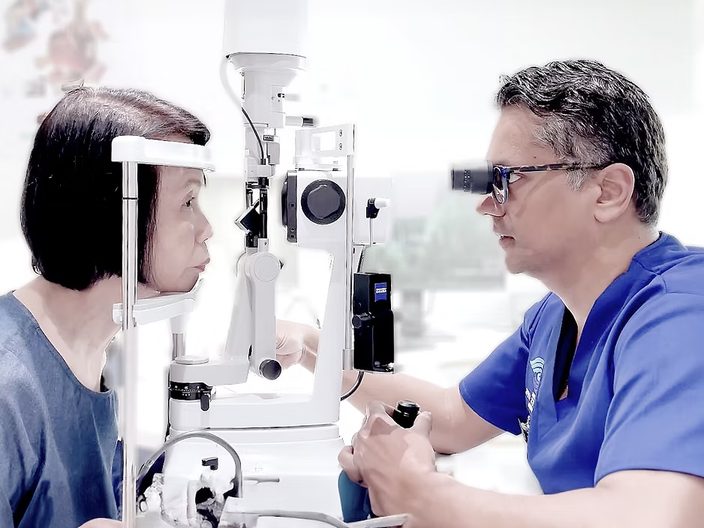
Later on, you may notice yourself:
The exception is the acute form. Sudden eye pain with redness, haloes around lights, a headache and nausea is not something to book an appointment for — that is a same-day hospital presentation, and treatment within hours is what protects the eye.
No single test settles it. A pressure check at a spectacle counter is a starting point, not an answer.
A glaucoma assessment looks at the pressure, the nerve, and what the nerve is still doing. Each of these four answers a different question, and it is the combination that counts.
Two more may be added: gonioscopy, a look at the drainage angle, and pachymetry, which measures the cornea so a pressure reading can be read correctly.
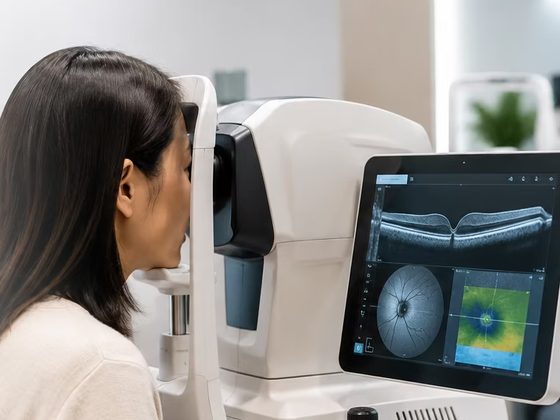
Two of these are the reason a routine check is worth booking when nothing is wrong. If you want the checks that come as a package, our eye screening appointment options set out what each one includes and who each is for. Side vision testing and a scan of the back of the eye come with the comprehensive screening package.
The aim is the same whichever route is taken: bring the pressure down to a level this nerve tolerates, and keep it there.
Because lost nerve cannot be recovered, treatment is about the vision you still have. Glaucoma is generally managed in three ways, alone or in combination:
Whichever route is taken, it is normally continued for life, with regular review to confirm the field of vision is holding.
Which of those suits an eye depends on how high the pressure is, how much damage is already there, how fast it is moving and how the eye responds — so it is settled at an examination and not in advance.
Glaucoma is treated at The Straits Eye Centre.
If you have been told your pressure is high, or a relative has glaucoma and you have never been checked, that is a reason to see an eye specialist rather than watch for symptoms — because in the common form there are none to watch for.
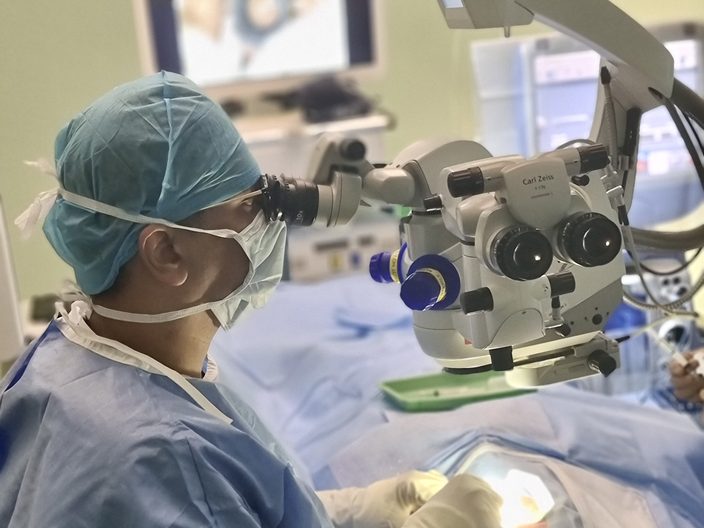
Glaucoma is the subspecialty of Dr Jayant V Iyer, a Senior Consultant Eye Surgeon and Medical Director at The Straits Eye Centre. Among our surgeons he is the glaucoma doctor. Talk to us for a quick appointment.
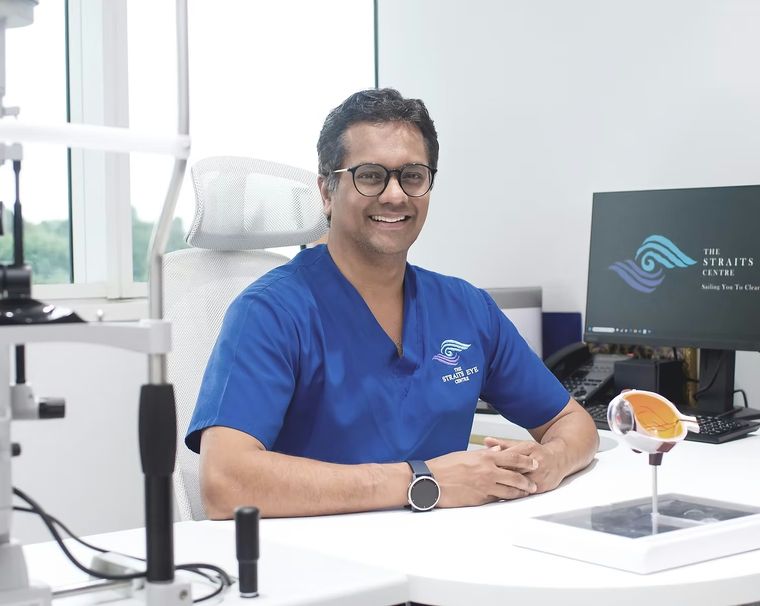
Senior Consultant & Medical Director
The Straits Eye Centre
MBBS · GDFM · MMed (Ophth) · FRCOphth · FAMS
Send us a message about where you are with it, and we will arrange the right next step.
Usually there are none. The common form is painless and takes side vision first, which the other eye compensates for, so many people notice nothing until a substantial amount of nerve has already been lost. That is why it is found on an eye examination rather than by symptoms.
No. A cataract is clouding of the lens inside the eye and the sight it costs you can be restored by surgery. Glaucoma is damage to the optic nerve, and the sight it costs you does not come back. You can have both at once, and they are treated separately.
Most eyes measure between 10 and 21 mmHg. That range is a guide rather than a dividing line: some eyes are damaged at pressures inside it, and many eyes above it are never damaged at all, which is why pressure alone does not diagnose glaucoma.
Yes. It is called normal-tension glaucoma, and the optic nerve is damaged at a pressure that measures in the ordinary range. It is one of the reasons an eye examination looks at the optic nerve and the field of vision rather than at the pressure reading alone.
No, and no treatment restores nerve that has already been lost. What treatment does is lower the pressure inside the eye to protect the vision you still have, which is why it is usually continued for life and reviewed regularly.
MIGS stands for minimally invasive glaucoma surgery: procedures that help fluid drain out of the eye through a very small incision, with less disturbance to the eye than conventional glaucoma surgery. It is generally used for mild to moderate glaucoma, often at the same time as cataract surgery, and may reduce the number of drops needed. It lowers the pressure less than conventional surgery, so it does not suit every eye. Dr Jayant V Iyer performs MIGS at The Straits Eye Centre.
No. Most people diagnosed and treated keep useful vision for the rest of their lives. The risk sits with glaucoma that goes unfound, because the early loss is in side vision and is easy to miss.
Risk rises with age and is higher with a family history of glaucoma, short-sightedness, diabetes, previous eye injury and long-term steroid use. A baseline eye examination is recommended at 40 even when nothing feels wrong.
Consultations and follow-up at six clinics islandwide. See all six.
Camden Medical Centre
1 Orchard Boulevard, #06-07/08 & #12-04
Singapore 248649
Camden Medical Centre
1 Orchard Boulevard, #12-04
Singapore 248649
Parkway East Medical Centre
319 Joo Chiat Place, #03-03
Singapore 427989
Blk 443 Clementi Avenue 3, #01-69
Singapore 120443
In Clementi New Town Centre
211 New Upper Changi Rd, #01-743
Singapore 460211
In Bedok New Town Centre
Blk 185 Toa Payoh Central, #01-320
Singapore 310185
Send us a message with what you have been told and a time that suits, and we will arrange an examination.
Cannot find what you want? Ask our friendly staff instead.