An eye that turns
In, out, up or down, all the time or only when tired.

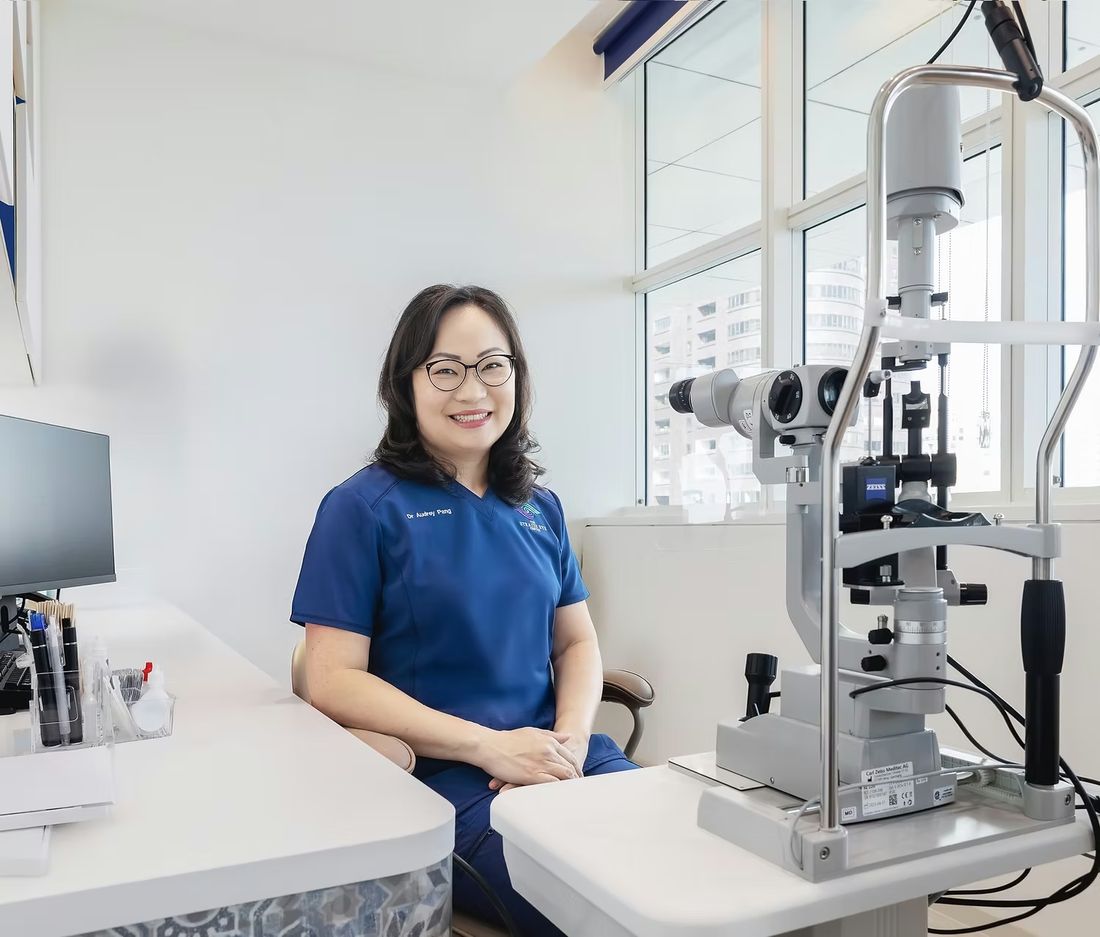
Eye care for babies, children and teenagers from Dr Audrey Pang, whose subspecialty is paediatric ophthalmology and squint.
Camden (Orchard)Parkway East (Joo Chiat)Children
A paediatric ophthalmologist
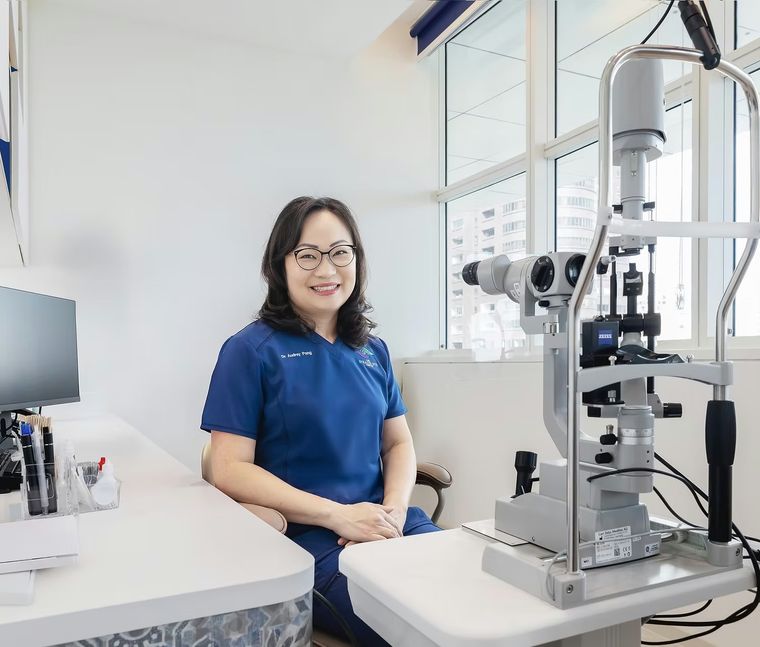
Dr Audrey Pang, Senior Consultant Eye Surgeon, fellowship-trained in paediatric ophthalmology and strabismus, and formerly Deputy Head of Paediatric Ophthalmology and Strabismus at Tan Tock Seng Hospital.
Checked while sight develops
A lazy eye responds best to treatment in early childhood, which is why a turning eye or a failed screening is worth an early look.
Two clinics
Dr Audrey sees children at Camden, on Orchard Boulevard, and at Parkway East, in Joo Chiat.
Found this helpful?

Children rarely say they cannot see well, because they assume everyone sees the way they do. So the signs are usually something a parent or teacher notices, and a paediatric ophthalmologist is the children’s eye doctor trained to find the cause.
In, out, up or down, all the time or only when tired.
Closing one eye or tilting the head to look at something.
Books or screens held very close, or trouble reading the board.
At school or at a clinic, even if your child seems fine.
A white or unusual reflection in a photograph, which should be checked promptly.
Of squint, lazy eye or childhood eye conditions.

Noticed one of these? Talk to our friendly staff for an appointment with Dr Audrey Pang.
The visit is adapted to your child’s age.
A squint is when the two eyes do not point in the same direction. Eyes that wander now and then in the first few months are common, but a turn that stays after about four months, or one that comes and goes in an older child, should be examined.
Aligned eyes: both point at what your child is looking at
A squint: one eye turns away, here inwards
A squint matters for more than looks: the brain can start to ignore the turned eye, which leads to a lazy eye. Treatment depends on the cause.
A lazy eye is an eye that has not developed full sight, even with glasses, because the brain has come to rely on the other one. A squint or a big difference in prescription between the eyes is the usual cause. It often looks completely normal, which is why it is usually found at a screening.
A lazy eye often looks just like the other
A patch on the stronger eye makes the lazy one work
Amblyopia treatment makes the brain use the weaker eye: glasses first, then a patch over the stronger eye for part of the day, or eye drops that blur it. It works best while vision is still developing, but older children can still improve.
Short-sightedness usually starts in childhood and increases as a child grows. Myopia control aims to slow that increase, so a child ends up with a lower prescription. There are three main options, and each can slow progression, though none stops it.
Which suits your child depends on their age, prescription and how fast it is changing. Progress is tracked with regular checks, such as our myopia screening at The Straits Eye Community Clinic.
Children are seen by Dr Audrey Pang at Camden and Parkway East. For myopia control at our community clinics, Dr Brendan Chin, Primary Eye Care Physician, sees children too. Talk to us for a quick appointment.
Senior Consultant Eye Surgeon, The Straits Eye Centre
Visiting Consultant, TTSH and NUH
MBBChir (Cambridge) · MMed (Singapore) · FRCOphth (London) · FAMS
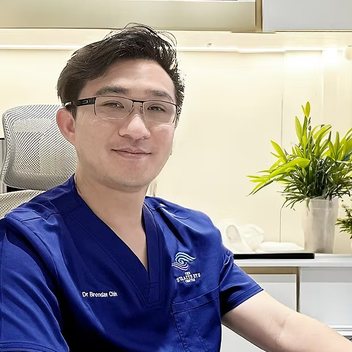
Primary Eye Care Physician
The Straits Eye Community Clinic
MBBS (Singapore) · GDFM (Singapore) · DWD (CAW)
| Service | Price |
|---|---|
| Camden & Parkway East | |
| First consultation | $174.40 |
| Follow-up consultation | $119.90 |
| The Straits Eye Community Clinic | |
| Myopia screening | $95.92 |
All fees shown are nett, with GST included. Tests, glasses, myopia control and surgery are charged separately, only where they are needed, and are quoted at your consultation.
A paediatric eye specialist, or paediatric ophthalmologist, is a children’s eye doctor: an eye specialist for kids, trained in children’s eyes and in squints. They examine, treat and operate, from babies to teenagers. At The Straits Eye Centre this is Dr Audrey Pang, whose subspecialty is paediatric ophthalmology and strabismus.
When an eye turns, your child squints or tilts their head to see, holds things very close, or does not pass a vision screening at school or at the clinic. A family history of squint or lazy eye is also a reason for an early check.
At birth, again in the first year, between one and three, and between three and five, then regularly through school, following the American Academy of Ophthalmology’s schedule. Most of these are screenings. A baby born prematurely, or with a family history of childhood eye disease, should see an eye specialist early.
Eyes that wander now and then in the first few months are common. An eye that still turns after about four months of age, or one that turns all the time, should be examined, because it does not grow out of it.
Often, yes. Treatment works best while vision is still developing, so earlier is better, but older children can still improve, especially those who have not been treated before.
With low-dose atropine eye drops, myopia-control spectacle lenses, or ortho-K and myopia-control contact lenses. Each can slow how fast short-sightedness increases, though none stops it. Which suits your child depends on their age, their prescription and how quickly it is changing.
There is no fixed starting age. It is usually begun once a child’s short-sightedness is found to be increasing, often in the early primary school years, and low-dose atropine has been studied in children from four.
Usually once the prescription has stayed stable for some time, which is often in the mid to late teens, as short-sightedness slows when growth ends. It is decided at a check-up rather than by age alone, because stopping too early can let it start increasing again.
Often. Children focus so strongly that their true prescription is hidden, so drops that relax focusing are used to measure it accurately. They can make vision blurry and bright light uncomfortable for some hours afterwards.
A first consultation with Dr Audrey Pang is $174.40 and a follow-up is $119.90, nett, at our Camden and Parkway East clinics. Tests, treatment and surgery are charged separately, only where they are needed.
Yes. She treats squints in adults as well as children, including double vision from a squint, and performs adult cataract surgery.
Tell us your child’s age and what you have noticed, and we will arrange a time with Dr Audrey.