
Nuclear Cataract
This type forms in the dense centre of the lens, which hardens and yellows as it clouds — so distance vision and colour are usually affected before reading is.
- Distance vision and colour affected first
- Usually the slowest type to change
- Treated with routine cataract surgery
Camden (Orchard)Joo ChiatClementiBedokToa PayohJurong
Found this helpful?


What a nuclear cataract is
A nuclear cataract is a clouding of the nucleus, the dense centre of the eye’s natural lens. As it clouds, the nucleus hardens and turns yellow or brown, so distance vision and colour usually go before reading does.
Cataracts are named for where in the lens the clouding starts, and many eyes have more than one type at once.
-
Nuclear — clouding in the centre
-
Cortical — clouding from the edge inwards
-
Posterior subcapsular — clouding at the back
An examination note may say nuclear sclerosis instead — the same change at an earlier stage, which most older eyes show to some degree. It is called a cataract once it affects vision.
The change is often noticed in photographs, or when someone beside you reads a distant road sign before you can. A cataract screening at our community clinics is one way to have the lens looked at.
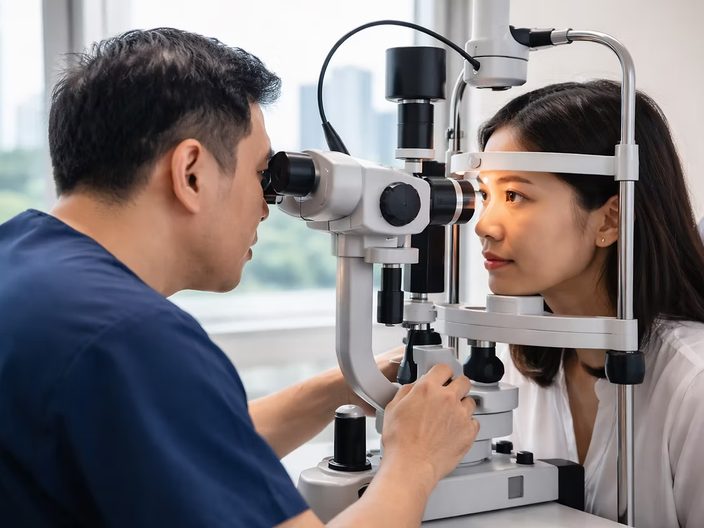


Concerned about cataracts or vision loss? Talk to our friendly staff for a same-day appointment (subject to availability).
Symptoms of a nuclear cataract
Colour and distance are what go first, and both change slowly enough to be easy to miss.
- Distance vision softening before near
- Colours that look washed out or yellowed
- A spectacle prescription that keeps changing
Blues are the hardest shades to tell apart, because a yellowing lens absorbs most at that end of the spectrum. Only an examination by an eye specialist in Singapore can tell a cataract from the other conditions that cause these symptoms. Message us on WhatsApp and we will arrange an examination.
Second sight, and why it does not last
Some people with a nuclear cataract find they can read without their glasses again, for a while. The hardening lens makes the eye slightly short-sighted, and a short-sighted eye sees close up without help.
It is a sign that the lens is changing, not a gain to rely on. The prescription keeps moving, and distance vision blurs at the same time.
What causes a nuclear cataract
Ageing accounts for most. Smoking and diabetes raise the risk.
- Ageing
- Lens fibres are added throughout life and none is shed, so the centre is compressed and yellowed over decades.
- Smoking
- Tied most strongly to this type. In a meta-analysis of 21 studies, people who had ever smoked were about 1.7 times as likely to have a nuclear cataract, and current smokers more so than former ones. It found no link with cortical cataract.
- Diabetes
- Associated with cataract of every type, this one included.
How quickly it progresses
A nuclear cataract is usually the slowest of the three types to change.
The Singapore Malay Eye Study re-examined Malay adults aged 40 and over after six years. Of the eyes that already had a cataract:
- Posterior subcapsular
- 40.6% had progressed within six years.
- Cortical
- 20.4% had progressed over the same period.
- Nuclear
- 5.9% had progressed over the same period.
An average describes a group, not an eye. Two people with the same finding can change at different rates. The interval between reviews is set at each examination.
How it differs from other cataracts
The three types are named for where in the lens the clouding starts.
- Nuclear
- Forms in the centre of the lens and is the one most associated with ageing. It yellows as it thickens, so colours wash out and distance vision goes first. It is usually the slowest of the three to change.
- Cortical
- Forms as spokes at the outer edge of the lens and works inwards. Glare and scattered light are the common complaints; it can be well advanced at the edges before the centre of vision is touched.
- Posterior subcapsular
- Forms as a patch at the back of the lens, under the capsule. It sits directly in the visual axis, so even a small one affects reading and vision in bright light first, often more than distance vision. It tends to be the fastest of the three to change.
How a nuclear cataract is treated
The only treatment that removes it is surgery to replace the clouded lens, done as day surgery under local anaesthesia. No drop, tablet or eye exercise clears a cataract.
New glasses can help for a while. Once they stop helping, the timing of surgery depends on how much the cataract affects your daily life. The next decision is choosing the lens.
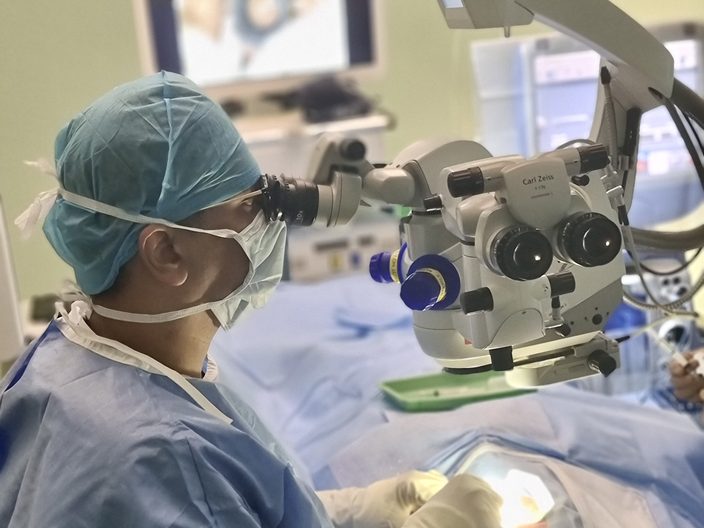
Nuclear Cataract Treatment Cost
Cataract surgery at The Straits Eye Centre is between $5,200 and $12,000 per eye, before MediSave. The Straits Eye Centre is a MediSave-approved clinic.
| Service | Per eye |
|---|---|
| Cataract surgery by senior eye surgeons | $5,200–12,000 |
| MediSave withdrawal limit | up to $3,280 |
Figures are per eye at The Straits Eye Centre, before MediSave. Withdrawal limit subject to approval by the CPF Board.
The final range depends on the lens, whether laser assistance is used, and your insurance status. Every operation is performed by one of our senior consultant eye surgeons. See the full cost breakdown
Who performs it
A nuclear cataract is removed by the same operation as any other cataract, and our senior consultant eye surgeons perform it — more than 60 years in ophthalmology between them. Talk to us for a quick appointment.
99%+
cataract surgery success rate at The Straits Eye Centre.
-
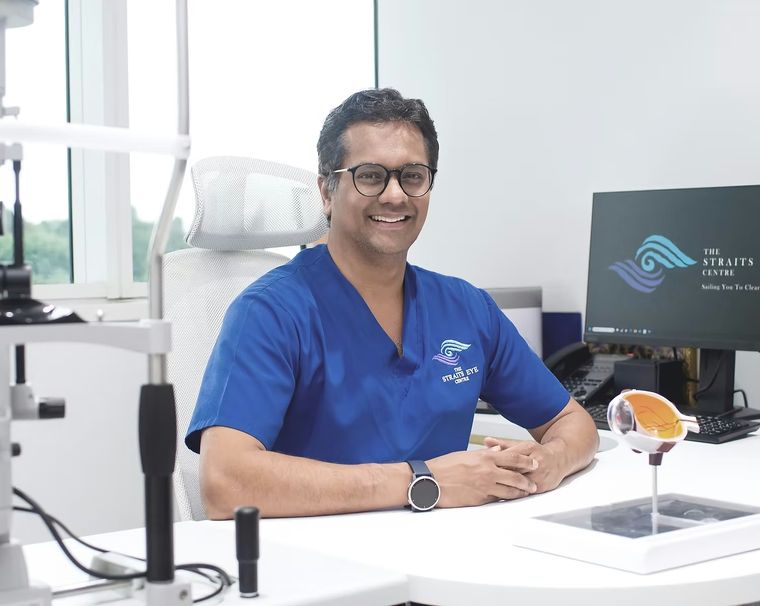
Dr Jayant V Iyer
Senior Consultant & Medical Director
The Straits Eye CentreMBBS · GDFM · MMed (Ophth) · FRCOphth · FAMS
-

Dr Jason Lee
Senior Consultant & Medical Director
The Straits Eye CentreMBBS · BMedSc · MMed (Ophth) · FRCOphth · FAMS
-
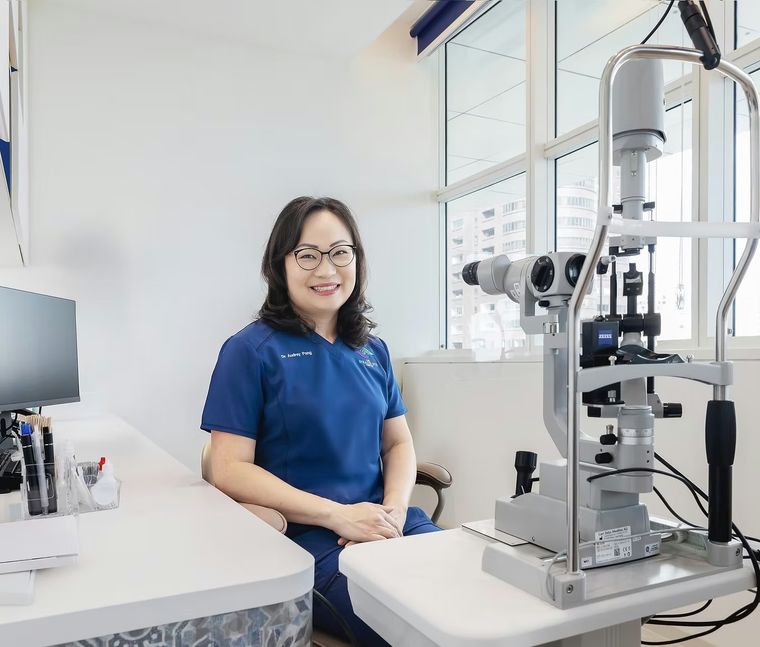
Dr Audrey Pang
Senior Consultant Eye Surgeon
The Straits Eye CentreMBBChir (Cambridge) · MMed (Singapore) · FRCOphth (London) · FAMS
-

Dr Laurence Lim Shen
Senior Consultant Eye Specialist and Vitreo-Retinal Surgeon
The Straits Eye CentreMBBS (S’pore) · MRCS (Edin) · FRCS (Edin) · FAMS
Common questions
What is a nuclear cataract?
It is a cataract that forms in the nucleus, the dense centre of the eye’s natural lens. The nucleus hardens and takes on a yellow or brown tint as it clouds, which is why an examination note may record nuclear sclerosis. It is the type most associated with ageing.
What is the difference between a nuclear cataract and nuclear sclerosis?
They describe the same process at different stages. Nuclear sclerosis is the hardening and yellowing of the centre of the lens, which happens to some degree in most older eyes. It is called a nuclear cataract once that change is dense enough to affect vision.
How does a nuclear cataract affect vision?
Distance vision usually goes before near vision, and colours are affected early — whites look creamier and blues are hardest to tell apart, because the yellowing lens absorbs light at the blue end of the spectrum. The change is gradual enough that people often notice it first in photographs or against a fresh white surface.
What is second sight?
It is the folk name for a refractive change a nuclear cataract can cause. As the centre of the lens hardens it bends light more strongly, which shifts the eye towards short sight. In a study of 3,654 adults aged 49 and over, the small hyperopic shift older eyes normally show disappeared once nuclear opacity was advanced. It is a sign that the lens is changing, not an improvement to rely on — the prescription keeps moving.
Does smoking cause nuclear cataracts?
Smoking is associated with nuclear cataract more strongly than with the other types. A meta-analysis of 21 studies found that people who had ever smoked were about 1.7 times as likely to have a nuclear cataract, and current smokers were at higher risk than those who had stopped.
How quickly does a nuclear cataract get worse?
It is usually the slowest of the three types to change. In a six-year study of Malay adults aged 40 and over in Singapore, 5.9% of eyes that already had a nuclear cataract had progressed, against 20.4% of cortical and 40.6% of posterior subcapsular cataracts. Individual eyes vary widely.
Can new glasses fix a nuclear cataract?
A new prescription can help for a while, because part of what a nuclear cataract does is change the focus of the eye. It does not treat the clouding, and the prescription tends to keep moving. When glasses no longer restore comfortable vision, surgery is what removes the cataract.
Is a nuclear cataract the same as an age-related cataract?
Not quite. Age-related cataract covers all three types, each named for where in the lens the clouding starts. Nuclear cataract is the type most closely tied to ageing, but cortical and posterior subcapsular cataracts are age-related too, and many eyes have more than one at once.
Ask about your eyes
Send us a message and we will answer. If colours have started to look washed out, or your glasses prescription keeps changing, say so in the message.