

Monofocal Lens for Cataract Surgery
One distance, brought sharply into focus — and which distance that is, is a choice made before surgery.
- The lens most cataract surgery is done with
- Set for distance, arm’s length or near
- Lower end of the fee range
Camden (Orchard)Joo ChiatClementiBedokToa PayohJurong
Found this helpful?

What a monofocal lens is
A monofocal lens brings one distance into focus. It is the simplest of the intraocular lenses used in cataract surgery, and the one most cataract surgery is done with.
Your own lens changes shape to move focus between far and near. An implanted lens cannot. A monofocal lens is made to a single power, so one distance is sharp and the others are soft — which is why that distance is chosen before surgery.
-
Light from one distance is brought to a single point on the retina
Everything else is the same whichever type of lens is used: the cataract operation, the recovery and the risks do not change. Compare the lens types
Choosing the distance it focuses at
One of these is chosen before surgery, and changing it afterwards means another operation. None is the right answer in general; they answer different days.
- Set for distance
- The usual choice. Driving, television and faces across a room are in focus; reading glasses are needed for a book, and usually for a screen as well.
- Set for arm’s length
- A dashboard, a computer or a price label are in focus — the intermediate range. Distance is slightly soft and small print still needs glasses, so it suits a day spent mostly at a desk.
- Set for near
- Near vision is sharp without glasses, for reading and close handwork, and everything beyond about a metre needs them. Occasionally chosen by somebody short-sighted all their life who wants to keep reading as they always have.
Most people choose distance: it covers what is hardest to do in glasses — driving, stairs, faces across a room — and leaves reading to a cheap pair of readers.
Just tell our doctor how you spend your day — driving, screens, close work. There is no wrong answer; it is simply what the choice is made on.


Not sure which distance suits your day? Talk to our friendly staff and we will arrange an examination — the lens is recommended once your eyes are measured.
What you will still need glasses for
No lens is guaranteed to remove the need for glasses, and none should be chosen on that basis. With a monofocal lens set for distance:
- Reading
- Almost always, where the lens is set for distance. Off-the-shelf readers suit many people once the eye has settled.
- Screens
- Usually. A screen sits at arm’s length, which is between the two distances a distance-set lens and a pair of readers cover.
- Astigmatism
- A plain monofocal lens does not correct it. A toric version does, and whether you need one is measured before surgery.
The new prescription is not measured until the eye has settled, usually by the end of the first six weeks. Glasses bought earlier are made to a number that is still moving. See how recovery works
Monofocal lenses and astigmatism
Astigmatism blurs things at every distance, and most of it comes from the cornea — the clear front of the eye — curving more steeply in one direction than the other. Removing the cataract does not correct it.
-
Flatter across one direction
-
Steeper across the other
The two directions focus in different places, so there is no single point of focus — which is why the blur is there at every distance.
A plain monofocal lens leaves it where it was, so significant astigmatism can mean glasses for distance as well as reading.
A toric monofocal lens has the correction built in along one direction, so it has to sit at a measured angle. Incisions placed in the cornea during surgery are the other way of treating it.
How much astigmatism you have is measured before surgery, and that decides whether either is worth doing. How a toric lens works
Monovision with monofocal lenses
Two ways of setting the two eyes differently, so one pair covers more than one distance. Both are usually done with monofocal lenses.
- Monovision
- One eye is set for distance and the other for near, and the brain learns to use whichever eye is in focus.
- Blended vision
- The milder version. The second eye goes to arm’s length rather than near, so the two overlap more and the difference is easier to adjust to.
It suits some people very well and others not at all, and judging depth can be slightly harder.
Where possible, trial it with contact lenses first — a trial can be stopped and an implanted lens cannot.
There is more on how monovision and blended vision differ.
Where it sits in the cost of surgery
A monofocal lens sits at the lower end of the range for cataract surgery at The Straits Eye Centre. The floor applies in particular circumstances rather than being the usual price.
| Service | Price |
|---|---|
| Cataract surgery · per eye | |
| Cataract surgery by senior eye surgeons | $5,200–12,000 |
| MediSave withdrawal limit | up to $3,280 |
| With a Senior Eye Specialist · Camden (Orchard) and Parkway East (Joo Chiat) | |
| First consultation | $174.40 |
| Follow-up consultation | $119.90 |
| With a Senior Eye Specialist · Bedok, Clementi, Toa Payoh and Jurong | |
| First consultation | $130.80 |
| Follow-up consultation | $98.10 |
| With a Primary Eye Care Doctor · Bedok, Clementi, Toa Payoh and Jurong | |
| First consultation | $76.30 |
| Follow-up consultation | $54.50 |
Surgery figures are per eye at The Straits Eye Centre, before MediSave. Withdrawal limit subject to approval by the CPF Board. All fees shown are nett.
The lens is the largest single thing that moves the surgery figure, and a toric monofocal costs more than a plain one. Laser assistance and your insurance status move it as well. All surgeries are done by senior surgeons regardless.
What else changes the figure is set out on the cataract surgery cost page.
Who performs it
All our senior consultant eye surgeons have more than 60 years of experience in ophthalmology between them. Talk to us for a quick appointment.
10,000+
cataract operations, between our senior consultant eye surgeons.
99%+
cataract surgery success rate at The Straits Eye Centre.
-
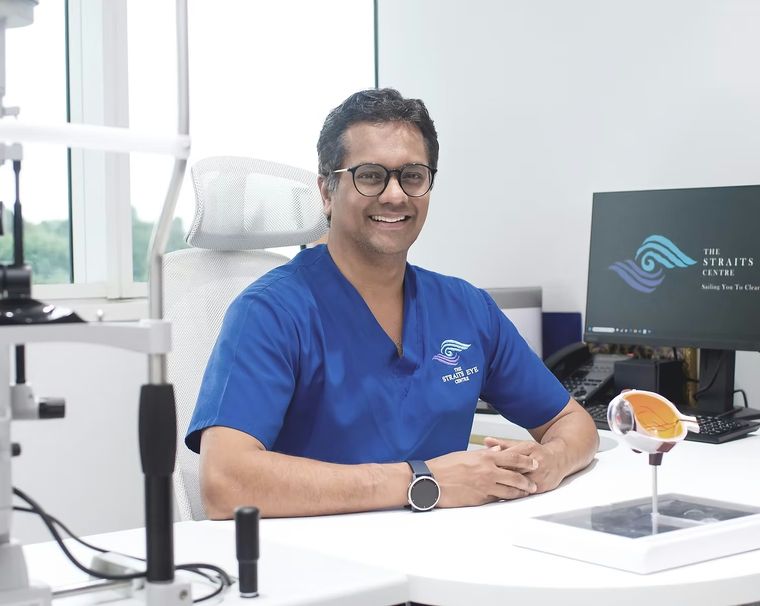
Dr Jayant V Iyer
Senior Consultant & Medical Director
The Straits Eye CentreMBBS · GDFM · MMed (Ophth) · FRCOphth · FAMS
-

Dr Jason Lee
Senior Consultant & Medical Director
The Straits Eye CentreMBBS · BMedSc · MMed (Ophth) · FRCOphth · FAMS
-
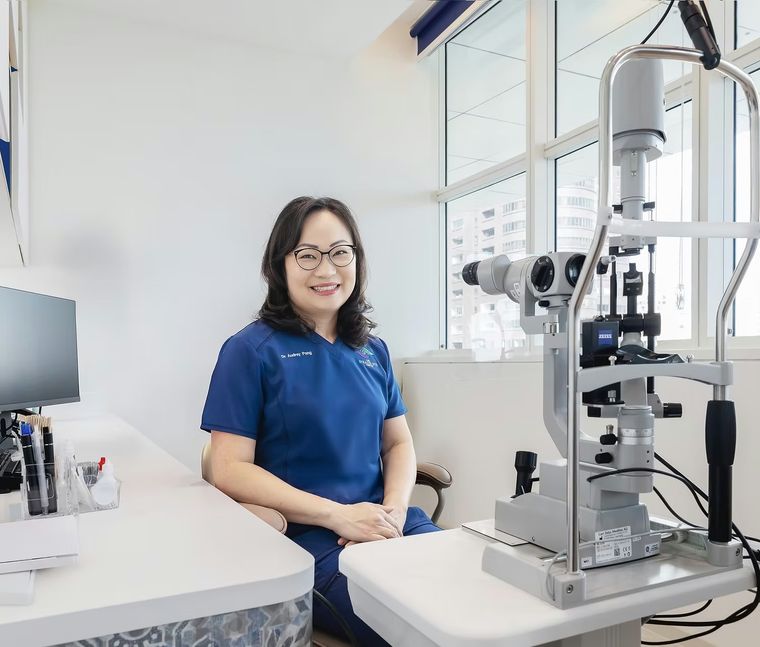
Dr Audrey Pang
Senior Consultant Eye Surgeon
The Straits Eye CentreMBBChir (Cambridge) · MMed (Singapore) · FRCOphth (London) · FAMS
-

Dr Laurence Lim
Senior Consultant Eye Specialist and Vitreo-Retinal Surgeon
The Straits Eye CentreMBBS (S’pore) · MRCS (Edin) · FRCS (Edin) · FAMS
Ask whether a monofocal lens suits you
Send us a message with how you use your eyes day to day, and we will arrange an examination. The lens and the distance it is set for are recommended once your eyes have been measured.

Common questions
Is a monofocal lens good for cataract surgery?
It is the lens most cataract surgery is done with, and it gives sharp vision at the one distance it is set for. Whether it is the right lens for you depends on what you want to do without glasses, which is why the recommendation comes after your eyes are measured rather than from a page.
Can I see far and near with a monofocal lens?
Not with the same eye. A monofocal lens brings one distance into focus and the others stay soft, so a lens set for distance leaves reading to glasses. Setting one eye for distance and the other for near — monovision — is one way around it, and it does not suit everybody.
Will a monofocal lens correct my astigmatism?
A plain one will not. Most astigmatism comes from the cornea, at the front of the eye, and removing the cataract does not change it. A toric monofocal lens has the correction built in, and incisions placed in the cornea during surgery are the other way of treating it.
Do monofocal lenses cause haloes at night?
Rings and glare around lights at night are reported less often with monofocal lenses than with lenses that split light between focal points, because a monofocal lens sends all of the light to one focus. Some glare in the first weeks is common whichever lens is used, and it usually settles.
How long does a monofocal lens last?
It is intended to stay for life. It does not wear out and, unlike the natural lens it replaces, it does not cloud with age. What can dull vision again months or years later is the capsule behind it clouding over — cells left behind at surgery growing across it — and that is treated with a short laser procedure in clinic.
What is an enhanced or advanced monofocal lens?
A group of lenses designed to give a little more depth of focus than a standard monofocal, without splitting light the way a multifocal does. They sit between the two, and whether one is suitable is a question for your surgeon once your eyes have been measured.
Does a monofocal lens change the cost of surgery?
A monofocal lens sits at the lower end of the $5,200 to $12,000 range for cataract surgery at The Straits Eye Centre. A toric version, extended depth of focus and multifocal lenses cost more, and the lens is the largest single thing that moves the figure.