
Optometrist vs Ophthalmologist
Who to see, and when. An optometrist checks how well you see. An ophthalmologist is a medical doctor who treats eye disease and operates.
- Senior Consultant eye surgeons
- 50+ combined years in ophthalmology
- Seven clinics in six locations islandwide
Camden (Orchard)Joo ChiatClementiBedokToa PayohJurong
Found this helpful?


What an optometrist does, and what an eye specialist does
Both look after your eyes, and you will see them for different things. The difference is training, and what each one is registered to do.
An optometrist
An optometrist measures how well you see, prescribes and fits glasses and contact lenses, and checks the health of the eye. They are not medical doctors. Optometrists in Singapore must be registered with the Optometrists and Opticians Board and hold a practising certificate. Where they find a sign of eye disease, they refer you on.
An eye specialist, or ophthalmologist
Ophthalmologist is the medical name for an eye specialist. They are medical doctors who diagnose and treat eye disease, and who operate. To practise as a specialist in Singapore a doctor must hold specialist accreditation and be entered on the Singapore Medical Council’s Register of Specialists.


Not sure which one you need? Tell our friendly staff what you have noticed and they will point you to the right doctor.
The differences, side by side
Four things separate the two, and the first one explains the rest.
| What is compared | Optometrist | Eye specialist |
|---|---|---|
| A medical doctor | No | Yes |
| Registered with | Optometrists and Opticians Board | Singapore Medical Council |
| Training | A degree in optometry. | A medical degree, then specialist training in ophthalmology. |
| Usually seen for | Eye tests, glasses and contact lenses. | Eye disease, treatment and surgery. |
When to see which
See an optometrist for
- A routine eye test, or a new prescription — a general eye screening.
- Glasses or contact lenses, and fitting them.
- Blurred vision that turns out to be a change in your degree.
- A child’s vision check, and a myopia screening to keep track of how it changes.
- An early look at the lens, with a cataract screening.
- A photograph of the retina, in a diabetic eye screening, if you have diabetes.
See an eye specialist for
- A cataract, or vision that glasses no longer correct.
- Glaucoma, damage to the optic nerve, usually linked to raised pressure inside the eye.
- New floaters or flashes, or a loss of vision.
- A lump on the eyelid that has not settled.
The two work together. Our eye screening packages at the Bedok, Clementi, Toa Payoh and Jurong clinics are optometrist-led and the report is reviewed by an ophthalmologist, so an optometrist who finds a sign of eye disease refers you on — a comprehensive eye screening is the fullest of the four.
Our guide to choosing the right eye specialist in Singapore lists ten things to check.
If an eye specialist finds a cataract, the treatment is surgery to replace the clouded lens.
Our eye specialists
The Straits Eye Centre’s eye specialists are three Senior Consultant eye surgeons. Talk to us for a quick appointment.
-
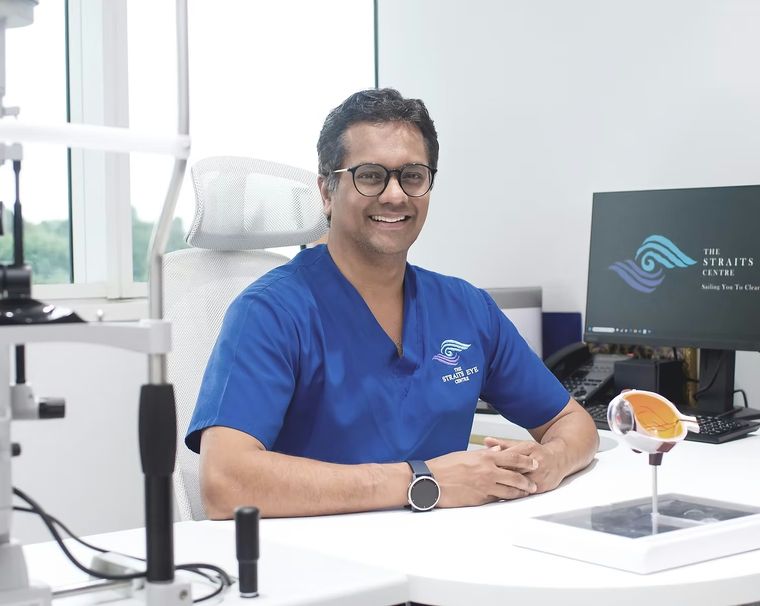
Dr Jayant V Iyer
Senior Consultant & Medical Director
The Straits Eye CentreMBBS · GDFM · MMed (Ophth) · FRCOphth · FAMS
-

Dr Jason Lee
Senior Consultant & Medical Director
The Straits Eye CentreMBBS · BMedSc · MMed (Ophth) · FRCOphth · FAMS
-
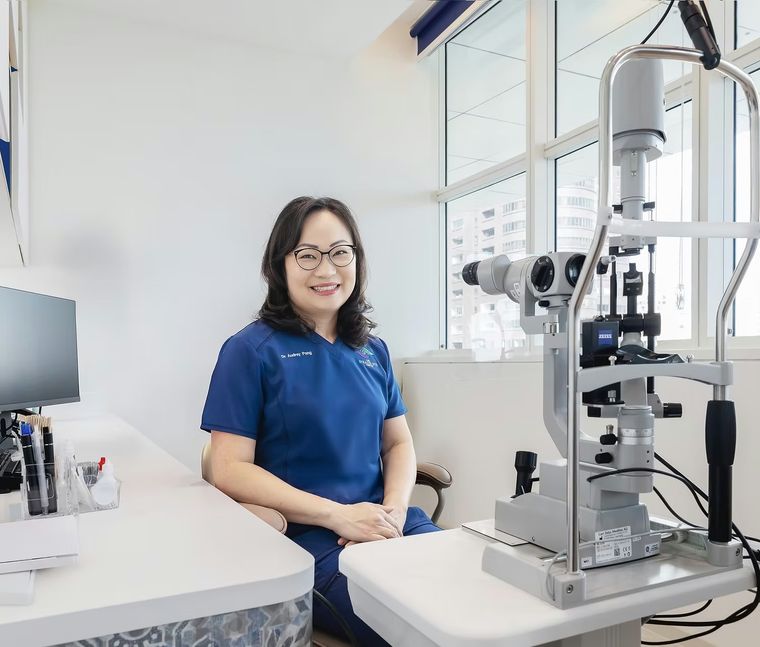
Dr Audrey Pang
Senior Consultant Eye Surgeon, The Straits Eye Centre
Visiting Consultant, TTSH and NUHMBBChir (Cambridge) · MMed (Singapore) · FRCOphth (London) · FAMS
Common questions
What is the difference between an optometrist and an ophthalmologist?
An optometrist checks how well you see and looks for signs of eye disease, and is registered with the Optometrists and Opticians Board. An ophthalmologist is a medical doctor, registered with the Singapore Medical Council, who diagnoses and treats eye disease and performs eye surgery.
Is an optometrist a doctor?
Not a medical doctor. Optometrists in Singapore are registered with the Optometrists and Opticians Board and hold a practising certificate. An ophthalmologist is a medical doctor, and holds specialist accreditation in ophthalmology.
Is an optician the same as an optometrist?
No. Both are registered with the Optometrists and Opticians Board, but an optician makes, fits and dispenses glasses and contact lenses, while an optometrist also examines your eyes and measures your vision.
Which one do I see for glasses or contact lenses?
An optometrist. They measure your vision and prescribe and fit glasses and contact lenses. An eye specialist is the one to see when an eye condition needs treatment or surgery.
When should I see an ophthalmologist instead of an optometrist?
When the problem is a condition rather than a prescription — a cataract, glaucoma, or a change such as new floaters, flashes or a loss of vision. An optometrist who finds a sign of eye disease will refer you to an eye specialist.
Not sure who to see?
Send us a message with what you are noticing and a time that suits, and we will point you to the right doctor.