A failed vision screening
At school or at a clinic, even if your child seems to see fine.
A lazy eye sees less than it should, and usually looks perfectly normal. This page covers what causes amblyopia, how it is found, and how glasses, patching and drops treat it.
Camden (Orchard)Parkway East (Joo Chiat)Amblyopia
A paediatric ophthalmologist
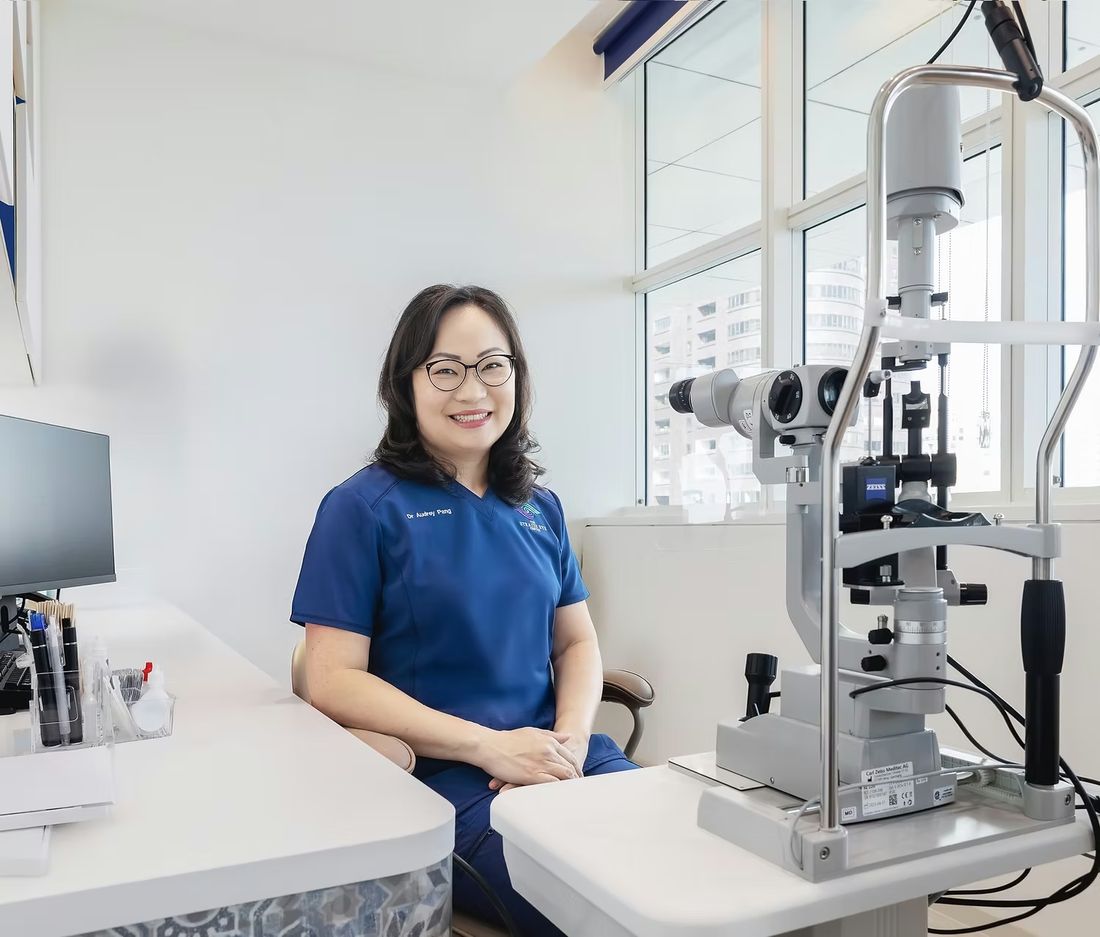
Dr Audrey Pang, Senior Consultant Eye Surgeon, fellowship-trained in paediatric ophthalmology and strabismus, and formerly Deputy Head of Paediatric Ophthalmology and Strabismus at Tan Tock Seng Hospital.
Treated while sight develops
Amblyopia responds best while the visual system is still developing, so a failed school screening or a turning eye is worth an early look.
Each eye measured on its own
A lazy eye is found by testing one eye at a time, because the better eye covers for it. Drops that relax focusing are used to measure the true prescription.
Found this helpful?

Sight is learned. In the first years of life the brain works out how to use what each eye sends it, and it needs a clear picture from both to do that. A lazy eye is one the brain never learned to use properly, so it still sees less than it should even once glasses have corrected it.
That is why it is called amblyopia rather than a weak eye. The eye is usually healthy. What is behind is the connection between that eye and the brain, which is also why glasses alone are often not the whole answer, and why it is treated while that connection can still change.
A lazy eye often looks just like the other
A patch on the stronger eye makes the lazy one work
The two are easy to confuse because they often travel together. A squint is about where an eye points. A lazy eye is about how well it sees. A squint is visible; a lazy eye is usually not. A squint is one of the commonest reasons a lazy eye develops, because the brain starts ignoring the picture from the turned eye — but a child can have a lazy eye with two perfectly straight eyes, which is the kind that gets missed.

Failed a school eye screening? Talk to our friendly staff for an appointment with Dr Audrey Pang.
Anything that gives the brain a poorer picture from one eye while sight is forming. The cause decides what is treated first.
Rarely by the child, and often not by a parent either.
A child with one good eye reads, plays and copes normally, and has nothing to compare their vision with, so they do not report it. Both eyes open, everything looks fine. The weaker eye only shows up when it is tested on its own — which is what a school vision screening does, and why a failed one is worth following up even when a child seems to see perfectly well.
At school or at a clinic, even if your child seems to see fine.
Pushing your hand away when the good eye is the one covered.
Or sitting close to the board, which can point to the prescription behind it.
A droopy eyelid or a childhood cataract blocking the view.
Treatment works in order: make the picture clear, then give the weaker eye work to do.
A patch and drops have been compared directly and improved moderate amblyopia similarly, so the choice is about what a child will actually keep to. The same is true of the hours: two hours a day has been compared with six, which is why they are set for the child rather than fixed.
Where a squint is the cause, the vision is usually treated first and the eyes straightened afterwards. Straightening an eye does not by itself make it see better.
The honest answer to “is it too late” is that it gets harder, not that there is a cliff edge.
Amblyopia is treated in childhood because that is while the visual system is still developing and the connection between eye and brain can still change. Earlier is easier. But the change is gradual rather than a door that shuts: improvement has been measured in children aged seven to seventeen, and most of all in those who had not been treated before.
For an adult who grew up with a lazy eye, treatment is unlikely to change the vision in it now. An examination is still worth having, for two reasons: vision that has dropped recently in a lazy eye is not the amblyopia and needs a cause found, and the better eye is the one now doing the work, so it is worth looking after.
Amblyopia treatment is a series of reviews rather than a single visit, because the hours are adjusted as the vision changes.
| Service | Price |
|---|---|
| Camden & Parkway East | |
| First consultation | $174.40 |
| Follow-up consultation | $119.90 |
All fees shown are nett, with GST included. Glasses, patches and eye drops are charged separately, only where they are needed, and are quoted at your consultation. Our published fees cover consultations at every clinic.
Amblyopia at The Straits Eye Centre is treated by Dr Audrey Pang, whose subspecialty is paediatric ophthalmology and strabismus. She sees children at Camden and at Parkway East. Talk to us for a quick appointment.
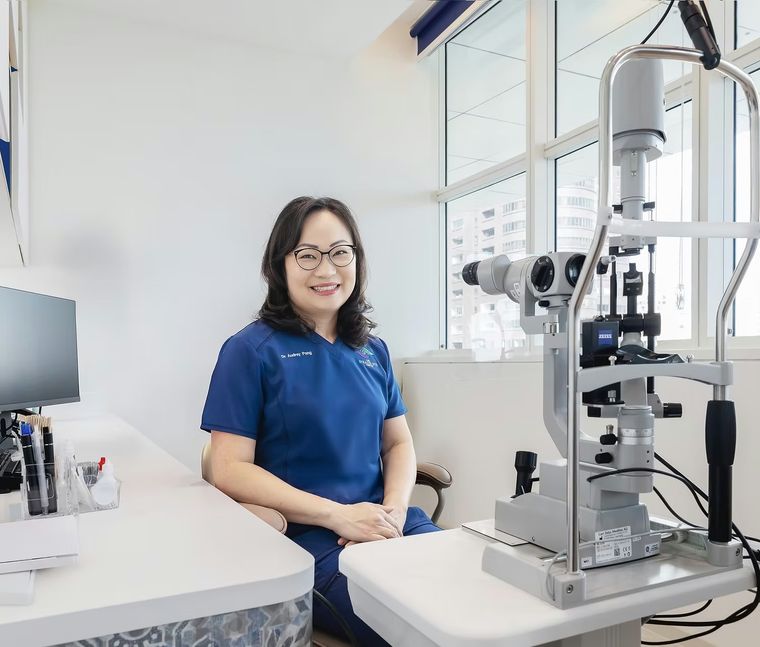
Senior Consultant Eye Surgeon
The Straits Eye Centre
MBBChir (Cambridge) · MMed (Singapore) · FRCOphth (London) · FAMS
A lazy eye, or amblyopia, is an eye that has not developed full sight even when glasses correct its prescription. The eye itself is usually healthy; what has not developed is the brain’s use of it, because something got in the way while vision was forming.
A squint is about where an eye points; a lazy eye is about how well it sees. A squint is visible, because one eye turns. A lazy eye usually looks completely normal. They are connected: a squint is one of the commonest causes of a lazy eye, because the brain starts ignoring the turned eye. A child can have one, the other, or both.
Anything that gives the brain a poorer picture from one eye while sight is developing: a squint, a big difference in prescription between the two eyes, a strong uncorrected prescription in both, or something blocking the view such as a droopy eyelid or a childhood cataract.
Usually you cannot, which is why screening matters. A child with one good eye sees well enough to read, play and pass unnoticed, and will not report a problem because the view has always looked that way. It is generally found when each eye is tested on its own. Covering one eye and getting an objection is sometimes the first clue at home.
Glasses first, which alone improve many lazy eyes, then giving the weaker eye work to do: a patch over the stronger eye for part of the day, or drops that blur the stronger eye where a patch is not tolerated. Any cause that blocks the view, such as a cataract or a droopy lid, is dealt with first.
Commonly a few hours a day rather than all day, for months rather than weeks, and it is reviewed at each visit as the vision changes. Two hours a day has been compared with six, so the number of hours is set for the child rather than fixed.
For moderate amblyopia the two have been compared directly and improved vision similarly. Drops are an alternative where a child will not keep a patch on, or where a patch is difficult at school.
Treatment is most effective while the visual system is still developing, which is why childhood is when it is treated. Improvement has been measured in older children and teenagers, including those not treated before, and it becomes harder with age. An adult with a lazy eye is still worth examining: the eye should be checked for any other cause, and the better eye looked after.
Sometimes. Where a difference in prescription is the cause, wearing the right glasses can improve the weaker eye over several months without anything else, which is why it is the first step and why the next review matters.
It can slip back after treatment stops, which is why patching or drops are usually reduced gradually rather than stopped outright, and why checks continue for a while afterwards.
Not for the lazy eye itself. Surgery is for a cause: straightening a squint, lifting a droopy eyelid, or removing a childhood cataract. The vision is then treated with glasses, patching or drops.
A first consultation with Dr Audrey Pang is $174.40 and a follow-up is $119.90, nett, at our Camden and Parkway East clinics. Glasses, patches and drops are charged separately, only where they are needed. Treatment is a series of reviews rather than one visit, because the hours are adjusted as the vision changes.
An eye specialist, usually one whose subspecialty is paediatric ophthalmology. At The Straits Eye Centre this is Dr Audrey Pang, Senior Consultant Eye Surgeon, who sees children at Camden and Parkway East.
Tell us your child’s age and what the screening found, and we will arrange a time with Dr Audrey.
Cannot find what you want? Ask our friendly staff instead.