A shower of new floaters
Dozens of specks, dots or cobwebs appearing over hours or days, not the one or two you have had for years.

The retina is the thin, light-sensitive layer at the back of your eye. Our friendly retina specialist, Dr Laurence Lim Shen, manages retinal conditions in everyone from young children to the elderly.
RetinaVitreoretinal surgeryPaediatric retina
A vitreo-retinal surgeon
Dr Laurence Lim Shen trained in retinal conditions at the Singapore National Eye Centre and Harvard Medical School, and holds three gold medals from the National University of Singapore.
A full check of your retina
Eye drops widen your pupil so Dr Laurence can see your whole retina, right to the edges.
Tell us about sudden changes
New floaters, flashes or a shadow in your vision? Contact us the same day, and tell us when you book.
Found this helpful?


A retina specialist is an eye doctor who treats problems with the retina and the vitreous, at the back of the eye. Some treat with scans, laser and injections; vitreo-retinal surgeons, like Dr Laurence, also operate inside the eye. You may also hear retina doctor or retina surgeon.
Their training builds up in stages:
The retina is the thin layer at the back of your eye that picks up light, a little like the film in a camera. In front of it sits the vitreous, a clear gel that fills the eye.
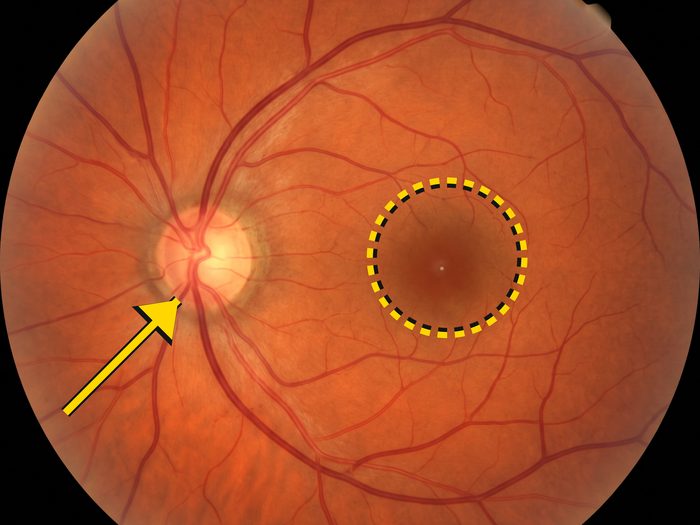
At The Straits Eye Centre, Dr Laurence Lim Shen treats retinal problems in adults and children, with medicine or surgery as your eye needs.
Retinal problems are usually painless, and the eye looks normal. Some change your vision, often in one eye, which the other eye can hide until you cover it. Others, like early diabetic retinopathy, cause no symptoms at all.
Dozens of specks, dots or cobwebs appearing over hours or days, not the one or two you have had for years.
Brief arcs or sparks at the edge of your vision, easier to see in the dark.
A dark area spreading across part of your vision, or part of your side vision missing.
Door frames, tiles or lines of text looking wavy, or a blank patch in the centre.
Blurring or dimming in one eye. A sudden drop needs care the same day; a slower change still needs checking.
A screening has found bleeding or swelling at the back of the eye, even if you feel fine.
If a shadow spreads across your vision, or floaters, flashes or a drop in vision come on suddenly, see an eye doctor the same day.

Noticed one of these? Talk to our friendly staff for an appointment with Dr Laurence.
Dr Laurence treats these conditions in adults and children.
| Condition | What it is |
|---|---|
| Macular hole | A gap at the very centre of the retina, where reading vision sits. |
| Retinal detachment | The retina lifting away from the wall of the eye, usually starting with a tear. |
| Diabetic retinopathy | Damage to the small blood vessels of the retina caused by diabetes. |
| Macular degeneration | The central retina thinning or leaking with age. |
| Myopic maculopathy | Stretching of the retina that comes with high short-sightedness. |
| Floaters and flashes | Most are harmless; an examination checks for a tear. |
| Paediatric retina | Retinopathy of prematurity in babies born early, and retinal detachments and inherited retinal dystrophies in children. |
| Cataract | A clouding of the lens at the front of the eye. Retina specialists also operate on cataracts. |
Treatment depends on the condition and how much of the retina is affected. It may be regular checks and scans, laser, injections into the eye, or surgery inside the eye.
If you have diabetes, a yearly diabetic retinal screening at The Straits Eye Community Clinic can pick up changes before you notice them.
Allow extra time, because the drops take a while to work.
| Step | What happens |
|---|---|
| What you have noticed | When it started, which eye, and whether it is changing. |
| Vision and pressure | A vision check and an eye pressure check, each eye on its own. |
| Dilating drops | Eye dilation widens the pupil. Vision stays blurry for a few hours, so do not drive. |
| A look at the retina | With a special lens at the slit lamp microscope, and often a head-mounted light, right out to the edges. |
| Scans and photographs | Where needed: an OCT scan of the macula, and photographs of the back of the eye to compare against next time. |
| What happens next | Whether anything needs doing now, and what to watch out for. |
Scans, laser and surgery are charged separately, only if your eye needs them, and are quoted at your consultation.
Dr Laurence Lim Shen, Senior Consultant Eye Specialist and Vitreo-Retinal Surgeon, sees adults and children at all our clinics. His own consulting rooms are at Camden Medical Centre, 1 Orchard Boulevard, #12-04 · Open in Google Maps. Talk to us for a quick appointment.

Senior Consultant Eye Specialist and Vitreo-Retinal Surgeon
The Straits Eye Centre
MBBS (S’pore) · MRCS (Edin) · FRCS (Edin) · FAMS
Consultation fees with a Senior Eye Specialist at our community clinics.
| Service | Price |
|---|---|
| With a Senior Eye Specialist — Bedok, Clementi and Toa Payoh | |
| First consultation | $130.80 |
| Follow-up consultation | $98.10 |
All fees shown are nett, with GST included. Scans, laser, injections and surgery are quoted at your consultation. Fees at Camden (Orchard) and Parkway East (Joo Chiat) differ: see the fees at Camden and Parkway East.
A retina specialist is an eye doctor who treats the retina, the light-sensitive lining at the back of the eye, and the vitreous gel in front of it. Some treat with scans, laser and injections; vitreo-retinal surgeons also operate inside the eye. Dr Laurence Lim Shen, Senior Consultant Eye Specialist and Vitreo-Retinal Surgeon, treats retinal conditions at The Straits Eye Centre.
Often, yes. The names are used interchangeably, but not every retina specialist operates. A vitreo-retinal surgeon is a retina specialist who also performs surgery inside the eye.
Yes. A retina specialist is first an ophthalmologist — a medical doctor who has completed specialist training in eye disease and eye surgery — and has then completed further fellowship training in the retina and the vitreous.
The difference is the depth of training in one part of the eye, not a different grade of doctor. An ophthalmologist diagnoses and treats problems across the whole eye; a vitreo-retinal surgeon has trained further in the retina and vitreous and operates on them. They also continue to provide general eye care and cataract surgery. If you are not sure which eye doctor you need, read how to choose an eye specialist.
Macular holes, retinal detachment, diabetic retinopathy, macular degeneration, myopic maculopathy, floaters and flashes, and retinal conditions in children including retinopathy of prematurity and detachments and dystrophies in childhood. Dr Laurence Lim Shen treats these in adults and in children, and also performs cataract surgery.
No. You can ask for an appointment directly. If you have a referral letter, or a report from a screening or an optometrist, bring it along so the doctor can see what has already been checked.
Because an optometrist, a GP or another eye doctor has seen something at the back of the eye that needs a closer look. Common reasons are new floaters or flashes, changes from diabetes, changes at the macula, or a suspected tear. A referral is a request for an examination, not a diagnosis.
Usually, yes. The retina sits behind the pupil, so drops are used to widen it and let the whole retina be examined, right out to the edges. Your vision stays blurry and bright light feels uncomfortable for a few hours, so do not drive yourself home.
A vision check and an eye pressure check, then a look at the retina after dilating drops, with a special lens at the slit lamp and often a head-mounted light. Scans and photographs of the back of the eye are added where needed, including a cross-section scan of the macula. Which tests you need depends on what the doctor finds.
Some retinal conditions can affect sight permanently, because the retina is nerve tissue and does not regrow once it is damaged. Many are treatable, and finding a change early usually leaves more of the retina to work with. A sudden change in one eye should be examined rather than watched.
Yes. Most floaters are harmless, and many become less noticeable over time. An examination checks for a tear in the retina, but one can still form afterwards, so come back if new floaters, flashes or a shadow appear. For dense floaters that do not fade, surgery can be discussed, though it carries risks.
Yes. Most retina specialists also perform cataract surgery, and Dr Laurence Lim Shen does too.
Some do. Children’s retinal care is a further specialty, covering retinopathy of prematurity in babies born early, and retinal detachments and inherited retinal conditions in children. Dr Laurence Lim Shen trained in paediatric retinal conditions at Harvard Medical School and the Massachusetts Eye and Ear Infirmary. For other eye problems in children, see our eye care for children.
At our Bedok, Clementi and Toa Payoh clinics, a first consultation with a Senior Eye Specialist is $130.80 and a follow-up $98.10, nett. Scans, laser, injections and surgery are charged separately, only where the eye needs them, and are quoted at your consultation. Fees at Camden and Parkway East differ.
Dr Laurence Lim Shen, Senior Consultant Eye Specialist and Vitreo-Retinal Surgeon. He holds MBBS (S’pore) · MRCS (Edin) · FRCS (Edin) · FAMS, and was formerly Senior Consultant in the Vitreo-Retinal Department at the Singapore National Eye Centre and in the Department of Ophthalmology at the National University Hospital.
Tell us what you have noticed and which eye, and we will arrange a time with Dr Laurence.
Cannot find what you want? Ask our friendly staff instead.